
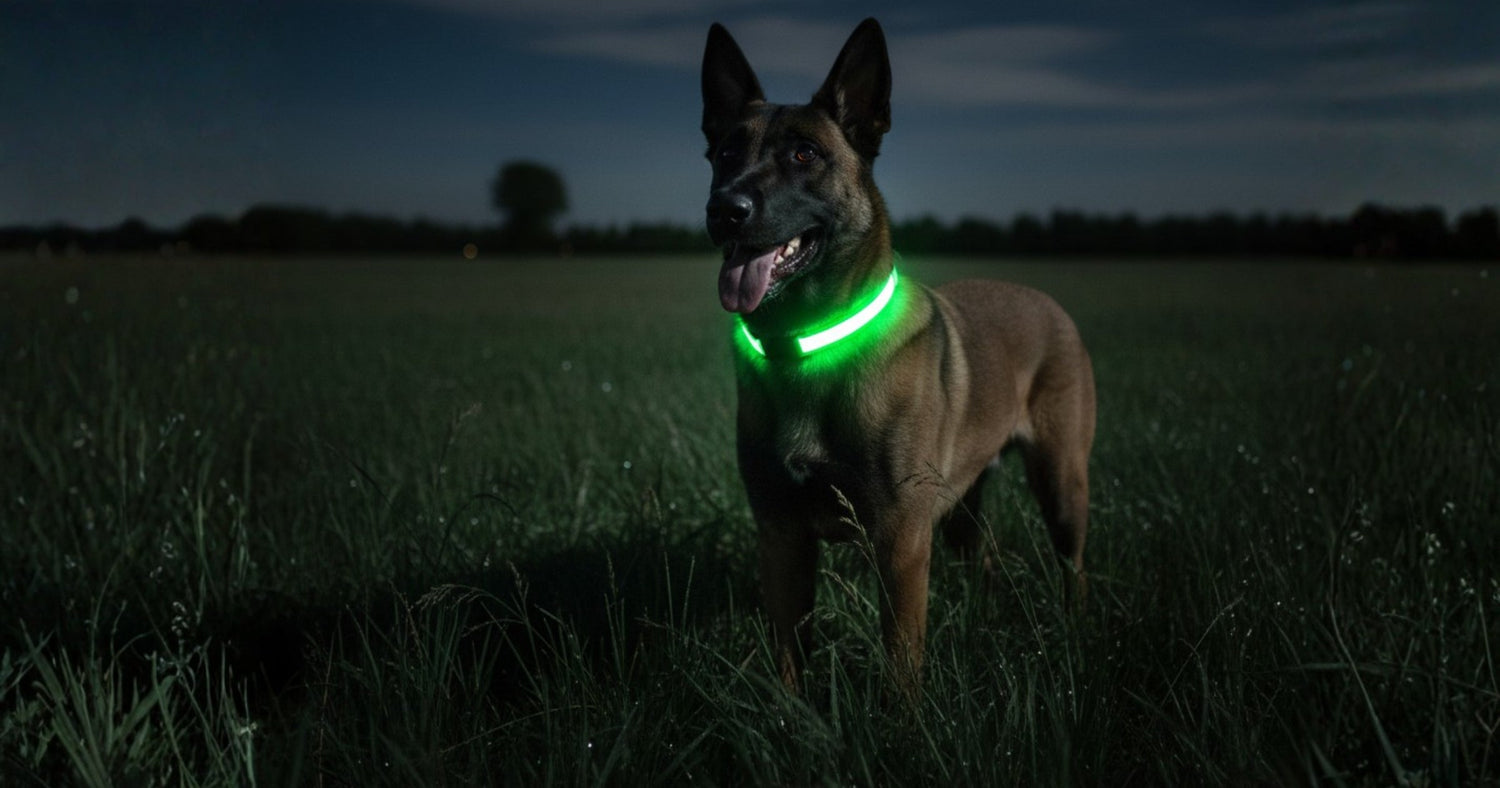
Introduction: The Hidden Danger of the Dark
Every pet owner knows the joy of walking their dog — the excitement at the lead coming out, the happy tail wag, the familiar routine. But what many don’t fully realise is just how quickly night-time or low-light conditions can turn a simple walk into a serious safety risk. In the UK, especially during autumn and winter, it gets dark early. Roads become harder to navigate, drivers’ visibility decreases, and pets can easily blend into the shadows.
This guide isn't just about LED collars; it’s about understanding visibility, traffic behaviour, environmental hazards, and how to build a safe night-time routine that protects both pets and owners.
Why Night-Time Safety Matters More in the UK
1. Early Sunsets & Long Winter Nights
From October to February, many UK pet owners walk their dogs before or after work. In both cases, it’s often fully dark — sometimes with heavy rain, fog, or icy ground. Visibility for both owners and drivers is heavily reduced.
2. UK Road Layouts Create Unique Risks
Many British roads — especially in suburban and rural areas — lack street lighting. Country lanes, village paths, canal walks, and open fields are common walking routes that become significantly more dangerous after dusk.
3. Increased Traffic in Peak Walking Hours
Evening dog walks often overlap with rush hour, making streets more chaotic and increasing the likelihood of accidents.
Why Your Dog Is at Risk: Understanding Visibility Science
Dogs Become “Invisible” Faster Than Humans Think
Drivers often misjudge how visible a dog actually is. A dark-coated dog in low light can completely blend into the background, even at short distances.
Studies show that:
- At 30mph, a driver needs at least 75 metres to notice, react, and stop.
- A dog without a reflective or LED item is only visible at 10–15 metres in darkness.
- With LED visibility gear, visibility increases to over 500 metres.
This is the difference between safety and tragedy.
Essential Visibility Gear Every UK Pet Owner Should Use
1. LED Dog Collars (The Most Important Layer of Protection)
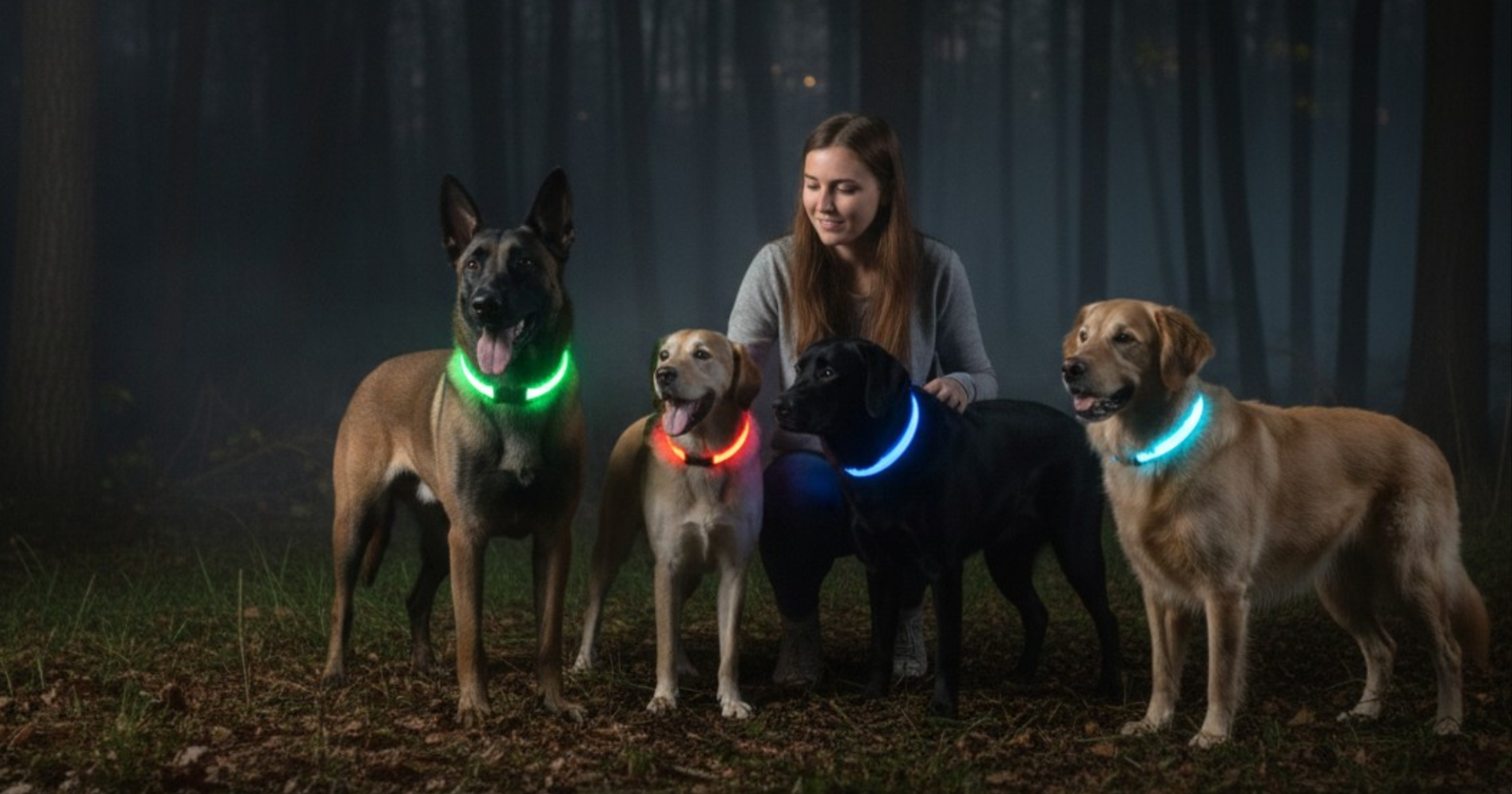
LED collars are the single most effective way to keep a dog visible in darkness. They provide visibility in all directions, unlike reflective gear which only works when light hits it.
High-quality LED collars should include:
- Adjustable brightness settings
- 360-degree light emission
- Waterproof coating for rain or mud
- Rechargeable battery
- Multiple flashing modes for traffic-heavy areas
This is exactly what GuardianPaw collars are built to do — protect pets where visibility matters most.
2. Reflective Harnesses and Leads
Reflective materials bounce back artificial light, making your dog visible when caught by car headlights.
These work best paired with LED lighting — one isn’t a replacement for the other.
3. High-Visibility Outfits for Winter
Waterproof jackets with reflective strips or LED stitching improve visibility and help keep dogs warm, especially smaller or short-haired breeds.
Night Walk Safety Checklist: Before You Leave Home
Use this simple checklist for every walk:
- Is your dog wearing a working LED collar or harness?
- Is your lead reflective?
- Do you have a torch or headlamp?
- Is your phone charged?
- Is the ground icy or wet?
- Is your dog secure and calm before leaving?
Prevention starts with preparation.
Traffic Awareness: Staying Safe Near Roads
Walk Against Traffic
In rural or dark areas, always walk facing oncoming cars.
Keep Your Dog on the Inside
Your dog should walk between you and the road — never road-side.
Use Shorter Leads at Night
This prevents sudden darting and keeps your dog closer.
Avoid Dangerous Road Crossings
Instead, find:
- Zebra crossings
- Light-controlled crossings
- Areas with lampposts
A few extra minutes can save a life.
Safe Walking Techniques for Dogs with Different Temperaments
For Nervous Dogs
- Keep walks shorter
- Stay in familiar routes
- Avoid busy roads
- Use a no-pull harness combined with LED visibility
For Energetic Dogs
- Use parks or enclosed fields
- Choose wide pavements
- Ensure their collar brightness is on a flashing mode
For Off-Lead Dogs (When Allowed)
Never let dogs off-lead in darkness unless the area is fully enclosed and you use:
- LED collars
- Light-up tags
- Reflective coats
Even the best-trained dogs can startle or chase wildlife when visibility is low.
Weather-Specific UK Safety Tips
Rain & Fog
Rain drastically reduces visibility for drivers. Fog removes contrast entirely.
Use:
- Maximum brightness mode
- Reflective coat
- Glow-tag attached to collar
Frost & Ice
High slip risk for both dogs and humans.
Avoid steep hills and icy car parks.
Snow
Light-coloured dogs vanish in snow. LED collars become even more crucial.
How GuardianPaw LED Collars Reduce These Risks
Every collar is designed with UK weather and pet behaviour in mind:
- Waterproof coating
- Bright, long-distance LED visibility
- Rechargeable battery
- Durable silicone band
- Multiple flash modes
- Light spreads 360 degrees around the dog
Pet safety isn’t a product — it’s a responsibility, and GuardianPaw builds gear that keeps families whole.
Conclusion: Safety Starts With Visibility
Night-time dog walking doesn’t need to be stressful — as long as the right precautions are taken. Simple safety habits combined with well-designed visibility gear protect pets, prevent accidents, and give owners confidence during every walk.
With GuardianPaw, your pet is never invisible in the dark.

Leave a comment
This site is protected by hCaptcha and the hCaptcha Privacy Policy and Terms of Service apply.